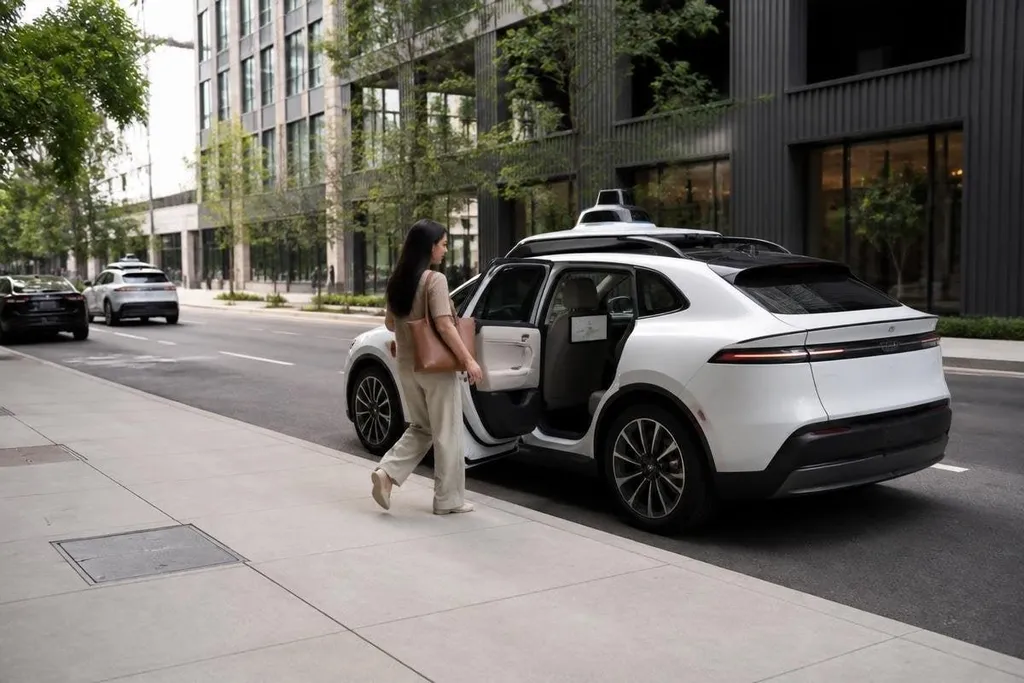
A robotaxi can carry passengers without a human driver in the front seat. That changes the business: the company sells rides instead of cars, and one vehicle may serve many trips across a day.
For city transport planners, fleet operators, and people who cannot drive, the question is practical: can the service run safely, reach enough places, and cost less than the options already available?
- Robotaxis can keep working between passenger trips instead of sitting in a private driveway.
- The main test is service quality: safe stops, clear remote support, and coverage beyond central streets.
- Lower driver costs do not remove vehicle, software, charging, cleaning, or repair costs.
The car becomes a service
A private car spends much of its time parked. One vehicle could carry a passenger in the morning, another at midday, and more people later, when demand and routing make those trips worthwhile.
That higher use can spread the cost of the vehicle across more rides. The result depends on several details: how many empty miles the robotaxi drives, how often it needs charging, and how long it waits between fares.
Removing the driver also changes the cost of each trip. It may cut the largest direct labor expense, but the fleet still needs maintenance teams, remote assistance, insurance, cleaning, mapping, and hardware repairs. Ignoring those costs leaves the business case incomplete.
Access matters as much as cost
People who cannot drive because of age, disability, or a medical condition may have another way to reach work, shops, health care, or family. That benefit appears only when the vehicle supports mobility equipment, has safe pickup points, and serves neighborhoods beyond profitable central routes.
Transport agencies could also use a robotaxi service for late-night travel or trips between major routes. It won't replace buses or trains. A shared car carries fewer people per trip, while fixed-route transport can move a large group along a busy corridor.
The useful comparison is the trip itself. If a robotaxi serves a short connection that would otherwise need a long walk or an expensive private ride, it can fill a real gap. If it adds cars to an already busy road, the result may be more traffic rather than better transport.
Safety is a service problem
Autonomous driving depends on cameras, radar, software, maps, and a way to handle situations the vehicle cannot resolve alone. A passenger needs to know what happens when road markings disappear, a delivery truck blocks the lane, or the robotaxi reaches a pickup point it cannot use.
That makes customer support part of the safety system. Clear instructions, a working emergency call path, and a remote operator who can handle unusual cases matter as much as the driving stack.
Remote help only matters if the record shows when an operator stepped in, why, and what happened next. Robot24.com robotaxi reporting can connect those details to the route, vehicle, and test date, giving you a firmer basis for judging claims about daily service.
The hardest proof is not a smooth ride on a familiar road. It is consistent service across weather, road layouts, construction, passenger needs, and busy curb space. Those conditions expose the gap between a controlled demonstration and daily transport.
A practical test for robotaxi plans
Before you support a service, join it, or compare it with a taxi fleet, check the parts that decide whether the idea works outside a press event:
- Service area: Check which roads and neighborhoods the robotaxi can serve, including the edge of the operating zone.
- Passenger help: Find out how riders contact a person during a delay, route problem, or medical emergency.
- Vehicle access: Confirm space for wheelchairs, child seats, luggage, and passengers who need more time at the curb.
- Cost structure: Separate the fare from fleet costs such as charging, cleaning, repairs, insurance, and remote support.
- Road behavior: Ask how the service handles construction, blocked lanes, poor weather, and unclear pickup locations.
- Public result: Measure wait times, missed pickups, empty travel, and changes in traffic before calling the service useful.
I think robotaxis are becoming more important because they force transport providers to measure the whole trip, not only the steering software. The service earns its place when it gives people a safe, reachable ride and uses each vehicle enough to justify the cost.